FROM MARKET SETTLEMENT TO PRINCELY RESIDENCE
Continuing this development, the emergence of fortified settlements and early urban centers marks a new stage in the history of the region, leading toward the formation of medieval Moldavia.
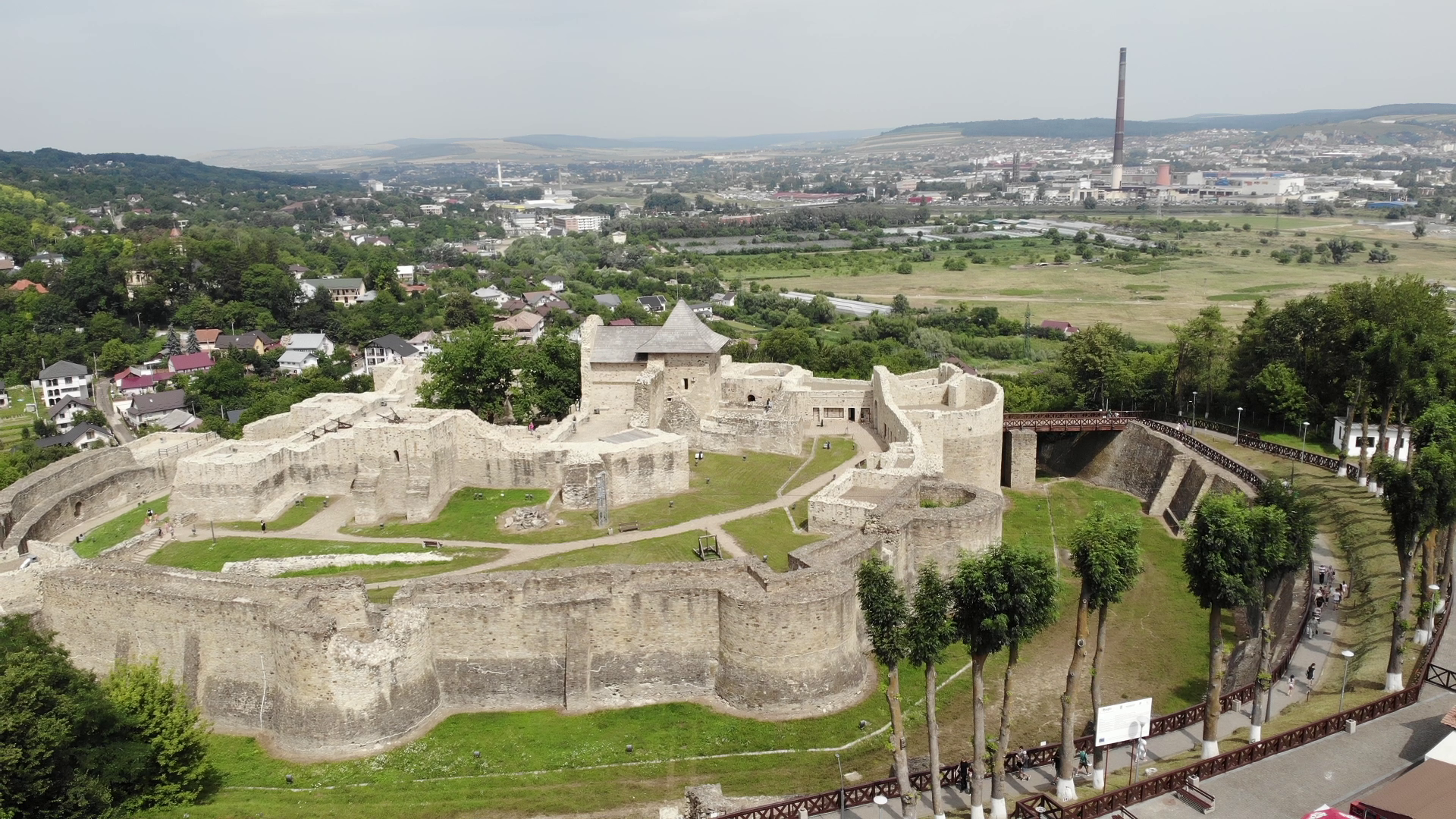
The history of Suceava is closely connected to the history of medieval Moldavia, where the city functioned as the princely residence for more than a century and a half. Its evolution from a simple fair to the main political and administrative center was gradual, and archaeological discoveries in areas such as Șipot, Mirăuți, and Armenească Street help illustrate this transformation.
SUCEAVA – CAPITAL OF MOLDAVIA
The most important stage in Suceava’s existence begins with its transformation into a princely residence. In the last decades of the 14th century, after Baia and Siret, Suceava became the third capital of Moldavia during the reign of Petru I Mușatin, between 1375 and 1391, a period in which the city was organized as the political, administrative, and economic center of the Moldavian state. The choice of the city was not accidental: its strategic position, control of trade routes, and defensive capabilities were decisive factors in consolidating it as a political center. Suceava maintained this status until the mid-16th century, when Alexandru Lăpușneanu moved the princely residence to Iași.
THE BEGINNINGS OF THE MEDIEVAL STATE
The earliest stages of Moldavia’s history are difficult to reconstruct because written documents prior to the late 14th century are very rare. Internal chronicles, correlated with the few surviving medieval documents, allow only an approximate chronology of the first rulers: Petru I, Roman I, Ștefan I, and Iuga. Sources sometimes differ regarding the duration of their reigns or the moment of ascension to the throne, and the difficulty is compounded by the Cyrillic writing system, in which numbers were represented by letters and manuscript copying could generate errors. An important landmark is the year 1365, when Dragoș, the voivode of Maramureș, arrived in Moldavia—a symbolic moment for the beginnings of the medieval state.
ARCHAEOLOGICAL EVIDENCE
The pieces displayed in this room come from archaeological discoveries made in various locations in Suceava. The ceramic vessels and tools presented reveal everyday life, as well as the way but also how a modest settlement gradually began to develop into became a political and administrative center, paving the way for Suceava to achieve the status of the capital of Moldavia.
SUCEAVA HISTORY MUSEUM