THE AGE OF ȘTEFAN CEL MARE
The reign of Ștefan cel Mare represents one of the most remarkable periods in the history of Moldovia. His 47 years on the throne left deep marks on the organization of the state, on economic and military life, as well as on culture and religion, to the point that many surviving monuments are traditionally linked to his name.
SUCEAVA – PRINCELY RESIDENCE
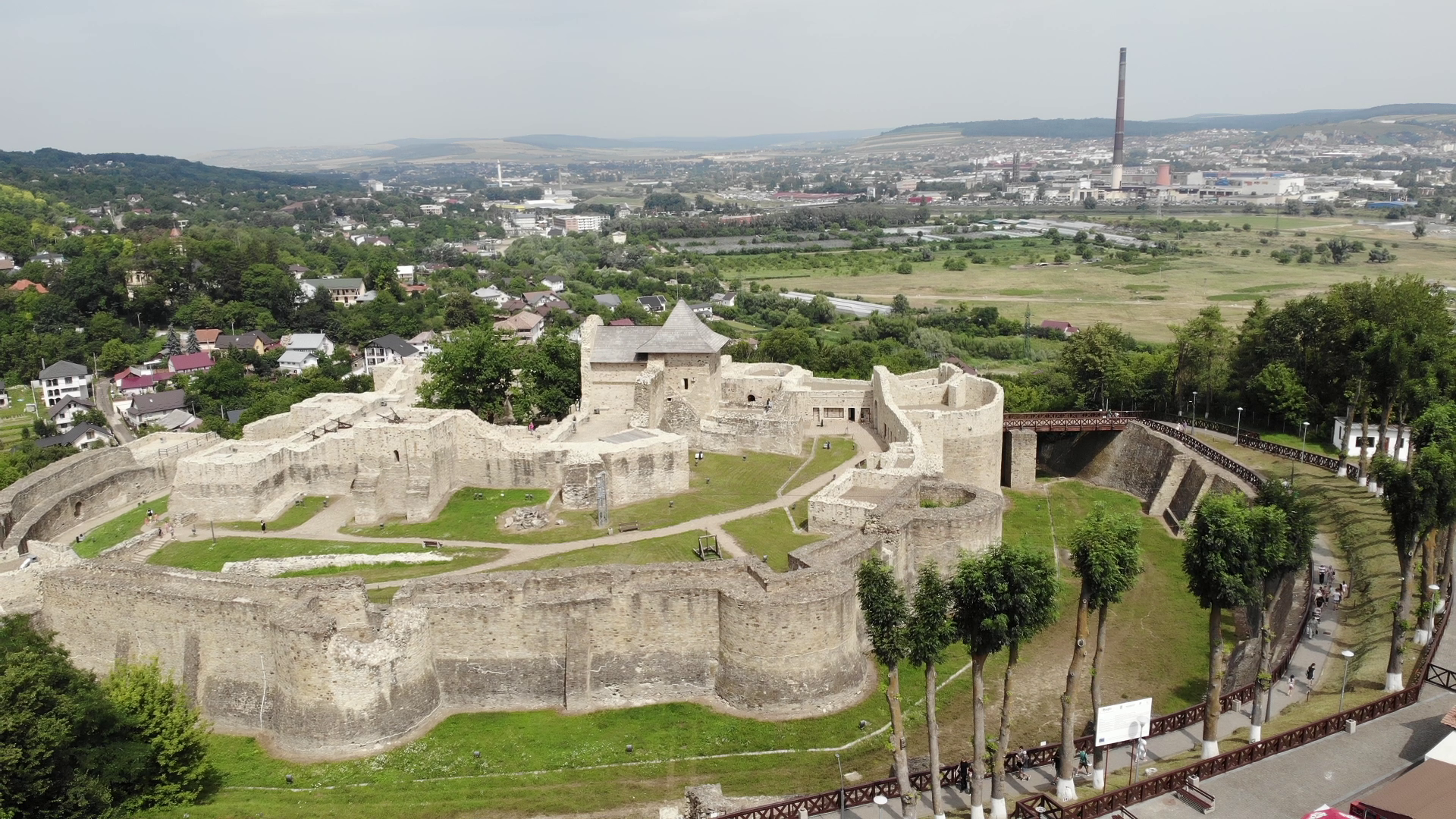
During his rule, Suceava reached its peak as a princely residence and political center of Moldovia. The ruler reinforced the Princely Fortress and the Princely Court, added new constructions, and paid special attention to economic and cultural development. Suceava’s strategic position on the Moldovan trade route made it an important hub for internal and external exchanges, hosting the main customs office through which merchant caravans passed.
ARCHITECTURE AND THE MOLDAVIAN STYLE
Ștefan cel Mare’s era marks the refinement of the Moldavian style in architecture. The large number of monuments built and the technical complexity of the constructions make this period one of the most fertile in the history of medieval Romanian art. The vault, a defining element of Moldavian religious architecture, appears as an innovation of this era, and churches from the late 15th century and early 16th century represent a fully mature stage in the country’s medieval art.
DECORATIVE ARTS AND CULTURE
This construction effort also stimulated the development of decorative arts. Churches and princely houses were adorned with glazed ceramic tiles and discs decorated with fantastical figures or heraldic symbols. Icons, precious metal objects, vestments, and illuminated manuscripts reflect the refinement of the princely court and the importance of religious life. A notable example is the reproduction of the last page of the Tetraevangelion donated by Ștefan cel Mare to Zografu Monastery in 1502, where the coat of arms of Moldovia, with the sun, moon, and aurochs head, is accompanied by a Slavonic text recording the donation made together with his wife Maria and son Bogdan. Another example is the Tetraevangelion of Humor, begun in 1504 by Ștefan’s order and completed during Bogdan III’s reign, which illustrates his interest in culture and religious education.
Ștefan cel Mare was present in all areas of public life, from state organization and military defense to culture and religion. His policies, decisions, and achievements shaped Moldovian society not only during his lifetime but also left benchmarks for his successors, making his reign a fundamental chapter in the history of Moldovia.
NATIONAL MUSEUM OF HISTORY