THE SOCIALIST ECONOMY
Economic development during the socialist period, after the nationalization of major means of production in 1948, was carried out starting in 1951 according to five-year plans. The vision for the new country was not based on tradition but on the Soviet model, presented as “the most advanced in the world.” The effort was enormous: industry was heavily affected by war, infrastructure was weak, resources were limited, and Romania had to pay a large war debt. In the 1950s, the economy was also strained by SovRoms, and economic cooperation with the West was initially interrupted. Priority was given to metallurgy, the chemical industry, machinery, and electrification. By the 1970s–80s, Romania produced goods that were also present on international markets.
INDUSTRIALIZATION IN SUCEAVA
In the Suceava region (Suceava County after 1968), several major industrial projects were built starting in the “Dej period,” including the Suceava Pulp and Paper Mill (1962), Wood Processing Plant (1963), Mechanical Enterprise (1963), and “Rarăul” Dairy in Câmpulung Moldovenesc. After 1965, this policy continued with new industrial enterprises. The regime did not tolerate unemployment, and those outside the workforce could be accused of “parasitism.”
THE LIMITS OF THE PLANNED ECONOMY
By the late 1970s, the planned economy began to slow down. Many enterprises dependent on imported raw materials faced shortages, producing from stock or lower-quality goods. Slogans such as “Comrade Plan” and “Five-Year Plan in Four and a Half Years” gradually lost their meaning.
COLLECTIVIZATION
Agriculture was reorganized through collectivization. Resistance from peasants persisted, including local protests such as the one in Calafindești in 1949. While mechanization and irrigation increased production, results were often exaggerated, and harvesting sometimes required additional labor. Mountain areas of the county were never collectivized.
BUILDING THE “NEW MAN”
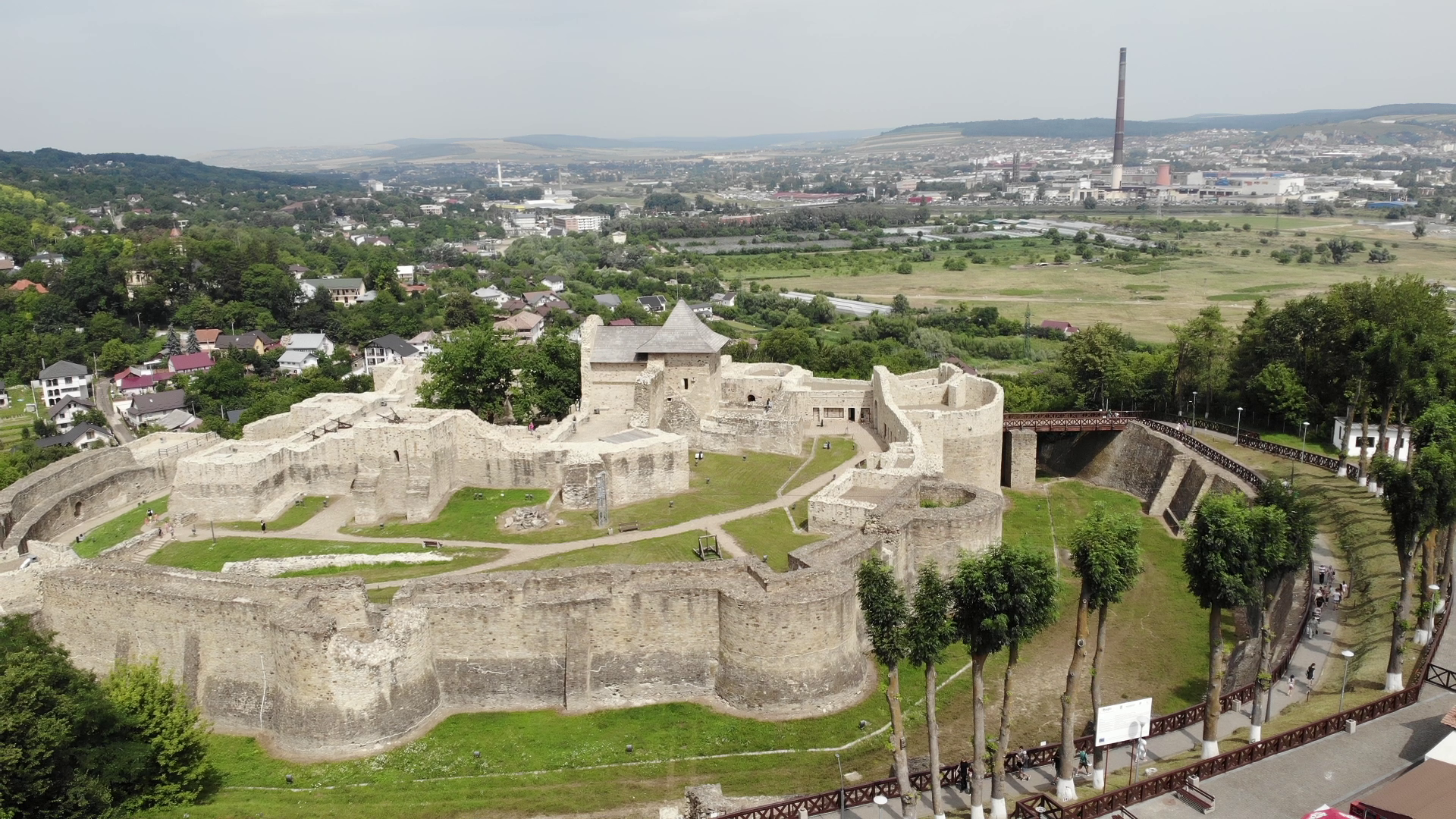
Building communism also involved shaping the “new man” from a young age. Political integration initially followed the Soviet model, later adapted in Romania during the 1970s. The Pioneers’ Organization, founded in 1949, included schoolchildren aged 7–14. Its early motto was: “Forward in the struggle for the Lenin and Stalin’s cause!” In the 1970s, the red pioneer scarf was complemented by a Romanian tricolor band. The organization coordinated educational, cultural, sports, and patriotic activities, including national festivals and events. In 1974, Suceava hosted the National Forum of Pioneers, with ceremonies in the city center and at Suceava Fortress.
After age 14, students joined the Union of Communist Youth (UTC), where ideological training continued. In 1976, the “Falcons of the Motherland” was created for preschool children, introducing them to symbols of the Communist Party and patriotic recitations. During the 1980s crisis, even official pledges were sometimes humorously adapted by children, reflecting everyday hardships.
TWO GENERATIONS
The room reflects two generations: the “sacrificial generation,” shaped by postwar hardship and rationing, and the “jeans generation,” which quietly resisted ideological control through music and culture. Together, they experienced the final decades of socialist Romania.
NATIONAL MUSEUM OF HISTORY