MUSEUM RECONSTRUCTION
━━━━ ◇ ━━━━━━━━━━━━━━━━━━━━━
LATE 14TH C. ━━━━━━━━━━━ 15TH C. ━━━━━━━━━━━ 1575
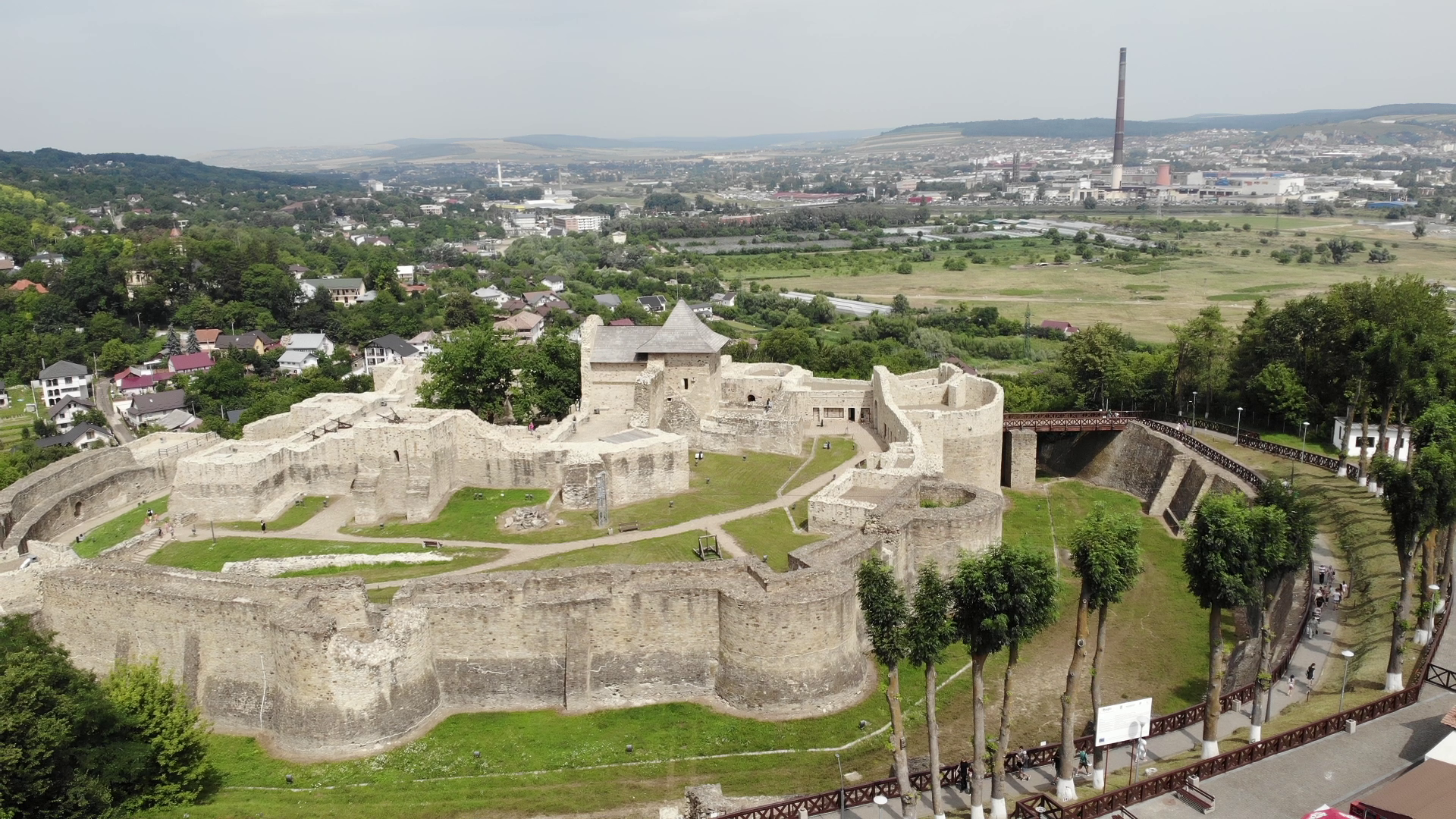
Today, the remains of the medieval Princely Court of Suceava can be seen in the city center, on Ștefan cel Mare Street (formerly Strada Domnească, ‘the Princely Street’). The ruins stand opposite Saint Dumitru Church and near the Ladies’ Church, also known as the Princes’ Church. For nearly two centuries, this area represented the political and administrative core of Moldavia.
The hall of the Princely Council of Suceava was established at the end of the 14th century, during the reign of Petru Mușat, and developed significantly under Alexandru cel Bun and Ștefan cel Mare. It included the ruler’s residence, administrative spaces, and official halls, among them the Throne Hall.
Within this setting, the Council would convene. This advisory body to the ruler was composed of high-ranking boyars, state officials, and representatives of the Church. It played a crucial role in decisions concerning foreign policy, internal administration, fiscal organization, and the defense of the country.
At the same time, together with the ruler, the Council functioned as the supreme court of Moldavia, where the most important cases were judged.
The number of Council members varied over time. In the 15th century, it could range from 5 to 39 members, depending on the political context and the importance of the matters discussed. Typically, the Council included around 20 individuals, selected from among the most influential boyars of the realm.
This reconstruction especially evokes the period of Moldavia’s peak, during the reign of Ștefan cel Mare. In the hall, you can see Lady Maria Voichița, the ruler’s third wife, daughter of the Wallachian ruler Radu cel Frumos and Lady Maria Despina. Through this dynastic alliance, Ștefan the Great strengthened political relations between Moldavia and Wallachia.
Nearby stands Bogdan, the son of Ștefan the Great and his successor to the throne, known in history as Bogdan the Third. His presence highlights the importance of dynastic continuity and the preparation of the heir for governance.
The Orthodox Church, a fundamental pillar of medieval society, was represented in the Council by the head of the Orthodox Church in Moldavia, Teoctist I. He held a dual role, both spiritual and political, serving as one of the ruler’s closest advisors and as a guarantor of legitimacy and order.
OFFICES OF THE PRINCELY COUNCIL
Each office played a distinct role in the functioning of the medieval Moldavian state.
The Vornic was responsible for internal affairs and often acted as the ruler’s deputy, overseeing the administration of the country.
The Hetman commanded the army and was in charge of military operations.
The Pârcălabi governed fortresses and territories, combining both administrative and military authority.
At the gates of the princely residence, the Gatekeeper of the Princely Fortress ensured security and controlled access to the ruler.
The Logothete was responsible for drafting official documents and for keeping the princely seal, the symbol of state authority.
The Treasurer managed the wealth of the state and oversaw its financial resources.
Finally, the Sword-Bearer carried the ruler’s sword, a ceremonial symbol of military power and princely authority.
DIPLOMACY ━━━━━━━━━━━━
Foreign envoys were also received in The Throne Hall, as Moldavia maintained diplomatic relations with Wallachia, Poland, Hungary, Venice, Kievan Rus, and the Ottoman Empire. Negotiations were conducted with the help of interpreters, the official translators of the princely court.
This reconstruction allows visitors to see how power functioned in medieval Moldavia, where the ruler’s authority, the influence of the boyars, the role of the Church, and foreign diplomacy were closely interconnected.
The Throne Hall thus remains a powerful symbol of state organization and of the decisions that shaped the history of Moldavia.
NATIONAL MUSEUM OF HISTORY