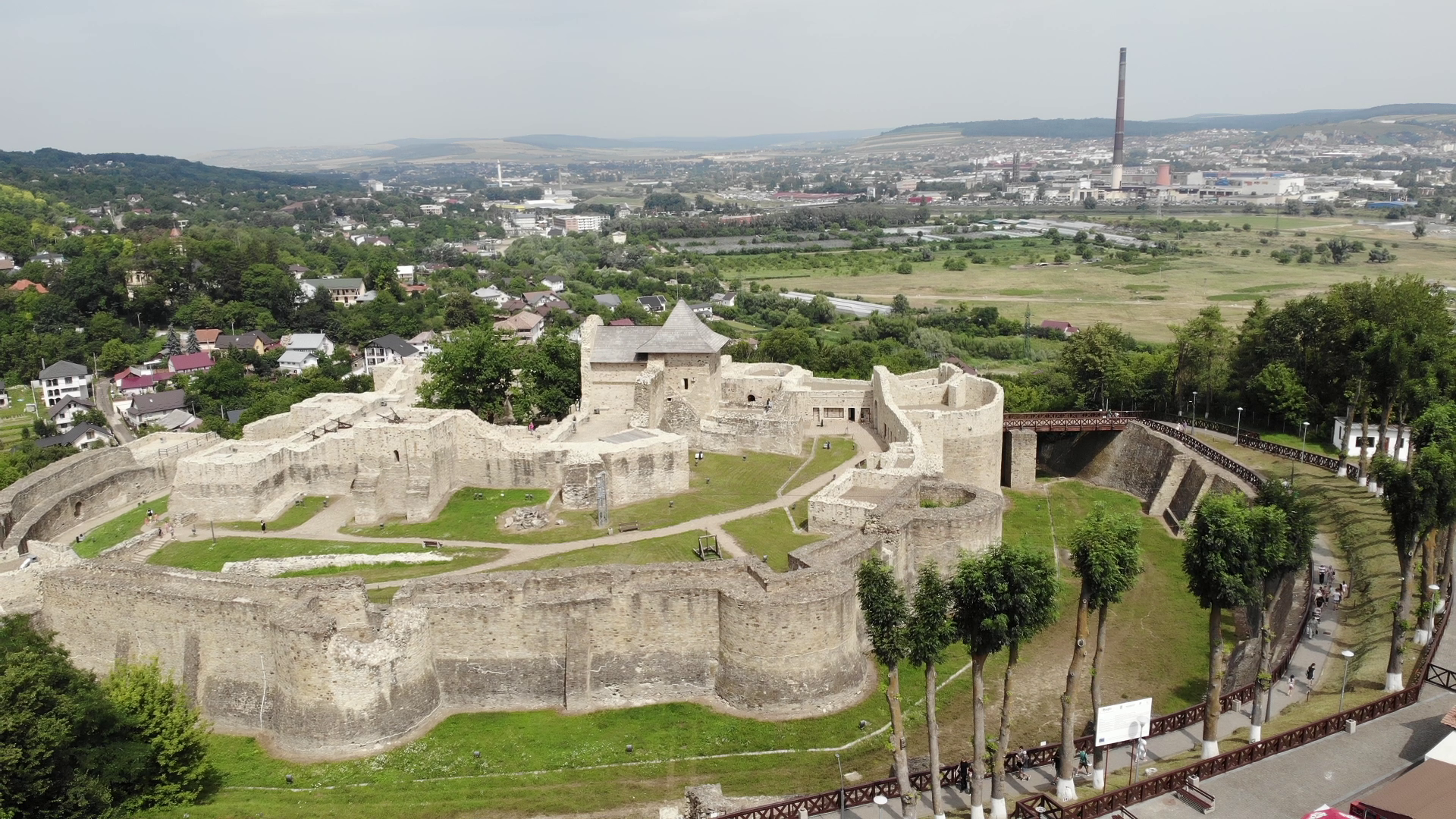
A CROSSROADS OF CULTURES
One of the defining features of medieval Romanian civilization was its ability to integrate both Western and Eastern influences. Moldova’s position at the crossroads of major trade routes facilitated contact with diverse cultures from Europe and the Orient.
TRADE BETWEEN EAST AND WEST
In Suceava’s marketplace, one could find silverware made by Transylvanian craftsmen, gold and silver from the mines of the Kingdom of Hungary, and Venetian fabrics, alongside fine ceramics from Asia Minor—such as Miletus and Iznik—and spices brought from the Far East. The presence of these goods is documented from the first half of the 15th century, through the commercial privilege granted by Alexandru cel Bun to Lviv merchants, confirming Moldova’s integration into the European economic circuit.
ORIENTAL AND WESTERN INFLUENCES
Eastern influences, initially less visible in the 15th century, became more pronounced in later periods, especially with the expansion of Ottoman power. In the 16th century, during the reign of Suleiman the Magnificent, contacts with the Ottoman world intensified, and the Moldovan boyars began adopting Eastern fashion elements, tastes, and customs, such as coffee drinking and smoking. At the same time, Western influences remained visible in architecture and decoration, through Gothic and Renaissance elements, harmoniously integrated into Moldovan spaces.
THE DRAGOȘ VODĂ STREET HOARD
A striking example of this cultural synthesis comes from one of the most valuable medieval hoards discovered east of the Carpathians. In 1985, during foundation works for a house on Dragoș Vodă Street in Suceava, archaeologists uncovered a collection of over 150 vessels and tools. The way the items were deposited—vessels stacked upside down, metal objects separated—and the variety of pieces suggest that the hoard belonged to an Armenian merchant, supported by its location in the former Armenian quarter of Suceava, documented since the late 15th century.
The hoard includes everyday, unglazed vessels dating to the end of Alexandru cel Bun’s reign, as well as glazed and decorated Miletus-type pieces from the second half of the 15th century. Metal objects—cauldrons, locks, nails, utensils, and knives—illustrate the intense commercial activity carried out in the Moldovan capital. The most valuable items are the Miletus-type vessels, considered early variants of Iznik ceramics, found intact or fragmentary.
A major fire that ended the use of this hoard is linked to Ottoman attacks in 1476 or 1485. Dated to the second half of the 15th century, this discovery perfectly illustrates medieval Moldova’s position at the crossroads of East and West—a space of exchange, synthesis, and cultural adaptation.
NATIONAL MUSEUM OF HISTORY