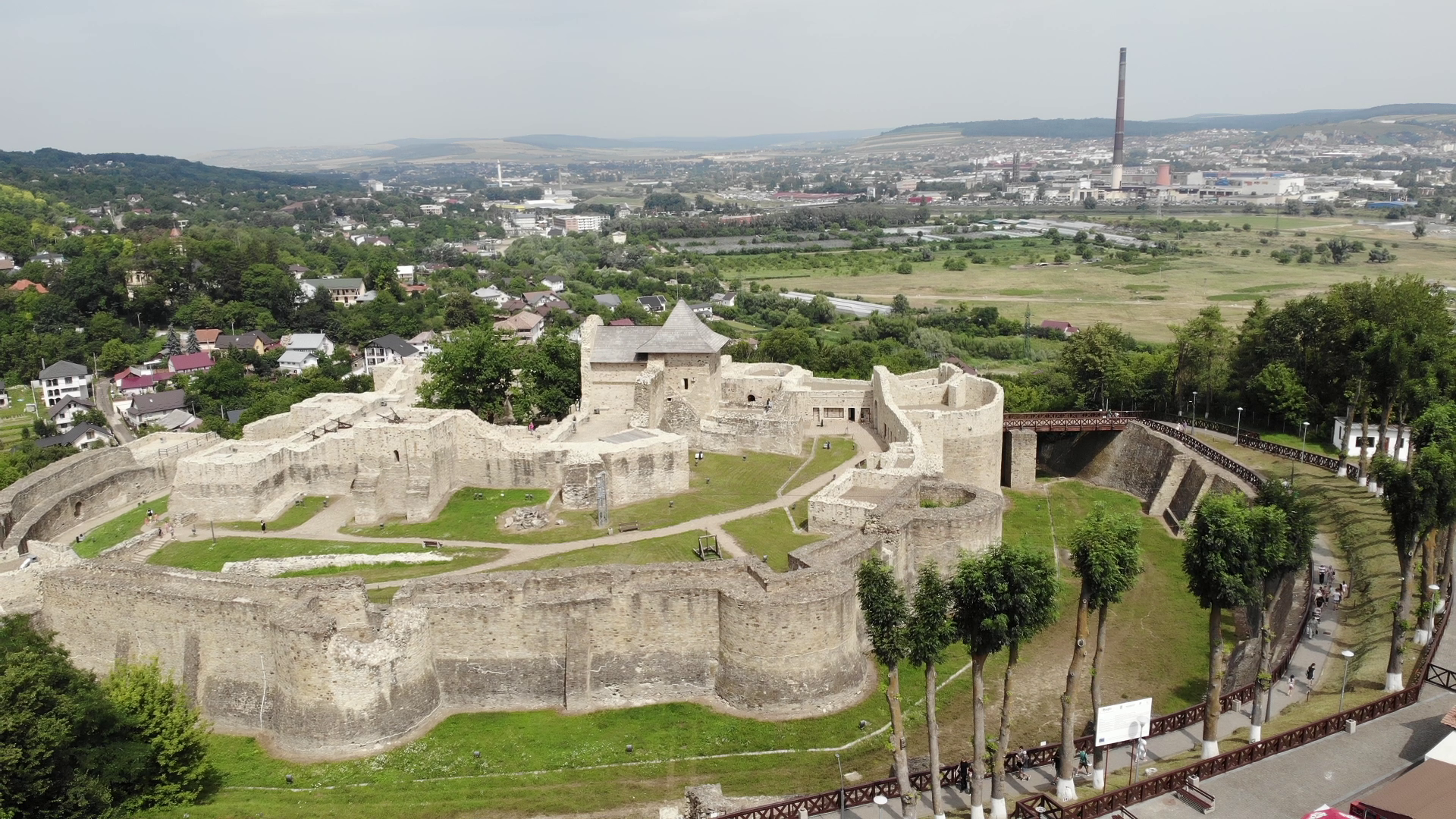
THE HABSBURG ANNEXATION
After the medieval period documented through charters, books, and princely acts, the history of northern Moldova enters a new phase, marked by major political and administrative changes, following the annexation of the region by the Habsburg Empire.
BUCOVINA AFTER 1775
Bucovina’s history begins in 1775, after the end of the war between the Russian and Ottoman Empires and the signing of the Treaty of Küçük Kaynarca. In this diplomatic context, the Habsburg Empire annexed the northern part of Moldova, including the districts of Chernivtsi and Suceava, which remained under Austrian rule for 144 years. Initially organized as the “Bucovina District,” it was subordinated to the Aulic War Council in Vienna and in 1786 was incorporated into Galicia as its 19th administrative unit.
At the time of annexation, Suceava had approximately 500 houses and a few thousand inhabitants. Austrian rule brought administrative and economic changes, contributing to the city’s development, which maintained strong trade and political ties with the rest of Moldova. Bucovina was noted for the peaceful coexistence of various ethnic and religious groups, many of whom arrived due to colonization promoted by the Austrian authorities.
BORDERS AND THE NEW ADMINISTRATION
The province’s borders were defined by the convention signed at Palamutka on July 2, 1776, establishing a territory of 10,441 km² and over 71,000 inhabitants, in three towns (Siret, Suceava, Chernivtsi), 226 villages, and 52 hamlets. On October 1–2, 1777, the population swore allegiance to the new rule, while Empress Maria Theresa guaranteed respect for local laws and customs.
Initially under military administration, the province was directly dependent on Vienna. The first governor, General Gabriel von Spleny, was followed by General Karl von Enzenberg. This system coexisted with older Moldovan administrative structures—ispravnici, vornici, and șoltuzi. Under Emperor Joseph II (1786), civil administration was introduced and Bucovina was integrated into Galicia, with Chernivtsi as capital.
COLONIZATION AND ECONOMIC DEVELOPMENT
During this period, Bucovina’s economy developed rapidly. Austrian authorities encouraged colonization, bringing populations from Austrian provinces to exploit natural resources. Some Moldovan boyars left the region, while others retained their estates and were later ennobled by imperial authorities.
ROADS, BRIDGES AND RAILWAYS
Economic progress was supported by infrastructure investments. Roads, bridges, and railways improved trade and forestry development. The first railway line, Nepolocăuți–Chernivtsi–Ițcani, was built between 1866 and 1869. Later, the Dornești–Rădăuți line opened in 1889 and was extended along the Suceava Valley to Seletin, with a branch to Putna. Together with bridges over the Suceava, Ceremuș, Prut, Moldova, and Bistrița rivers, these works formed the basis of Bucovina’s modernization under Austrian rule.
NATIONAL MUSEUM OF HISTORY